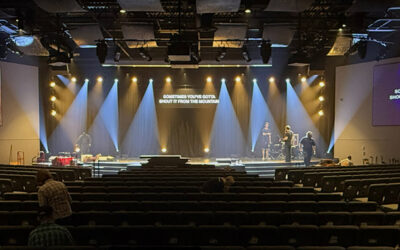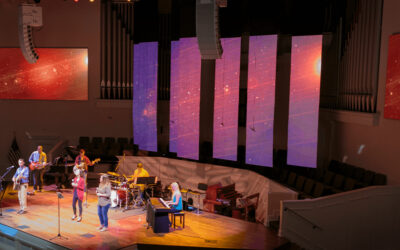
In the heart of any house of worship, the spoken word holds paramount importance. Whether it’s a sermon, a Scripture reading, or a prayer, the message is the centerpiece. This is why intelligibility in church audio systems is the single most crucial factor. If the congregation cannot clearly understand the words being spoken, the message—and the deeper spiritual connection—gets lost.
Vocal clarity isn’t just a technical detail; it’s a foundational element of worship audio design, ensuring that sermons, prayers, and choir performances are delivered with impact and meaning.
The Silent Enemy: Sanctuary Reverberation
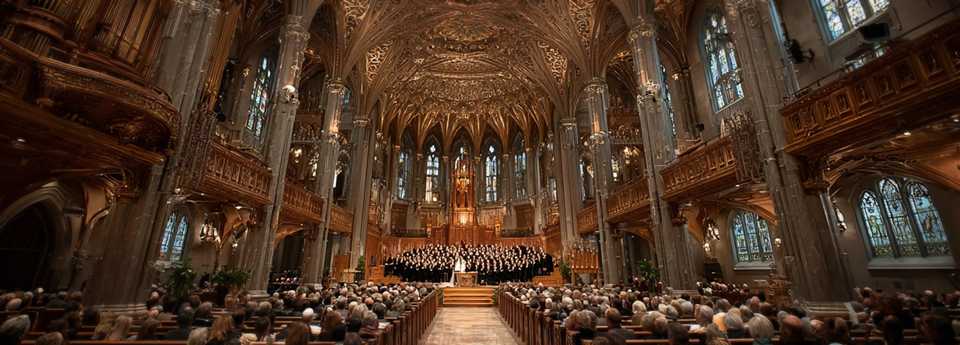
Large churches and worship spaces are often designed with high ceilings, stone or plaster walls, and tall windows—features beautiful to the eye but acoustically unforgiving. These characteristics lead to long reverberation times in sanctuaries, where sound lingers and overlaps.
When words bounce around the hard surfaces, the result is a wash of echo that muddies clarity. One word bleeds into the next, making sermons difficult to follow.
Solutions to control echo in churches include:
- Acoustic Treatments: Panels, bass traps, and diffusers reduce excessive decay time (RT60), cutting down unwanted echoes.
- Targeted Speaker Projection: Professional placement ensures sound reaches only the seats—not the reflective walls and ceilings.
This is where professional AV integrators excel, keeping sound energy focused on the congregation instead of wasted on reflective surfaces.
Microphone Matters: Choosing the Right Pastor Microphone
The audio chain is only as strong as its first link: the microphone. Proper selection ensures the pastor’s voice is captured cleanly before being amplified. Best microphones for pastors and choirs vary depending on mobility, preaching style, and room acoustics.
- Lavalier Microphones (Lapel): Great for discrete use, especially in liturgical settings. However, placement is crucial to avoid feedback.
- Handheld Microphones: For dynamic speakers or guest presenters, Shure’s iconic SM58 remains the gold standard for clarity and feedback rejection.
- Headworn Microphones: The most popular modern option for pastors, offering consistent placement, hands-free operation, and superior intelligibility. Shure’s worship-specific models are designed exactly for this need.
- Choir Microphones: Small-diaphragm condensers positioned carefully to balance collective voices.
The key takeaway: microphone choice must align with both speaker style and worship environment. This is where hands-on experience from AV integration specialists is critical.
Balancing Coverage: Traditional Point-Source vs. Steerable Column Arrays in Sanctuaries
Once the voice is captured, it must be evenly distributed throughout the sanctuary to ensure clear speech intelligibility. Choosing between traditional point-source speakers and steerable column arrays significantly affects this outcome. Point-source speakers are cost-effective and work well in smaller, rectangular sanctuaries, but they often produce uneven coverage, with reduced volume in the back rows and excessive reflections from ceilings that increase reverberation.
Steerable Column Arrays for Historic Churches
In older, historic churches, steerable column arrays like the Renkus-Heinz ICONYX Gen5 offer an ideal solution. These systems are discreet and blend seamlessly with the church’s architecture, preserving its aesthetic while delivering high-quality sound. Their advanced digital beam steering technology allows precise control of sound lobes, directing audio exactly where it is needed and avoiding unwanted reflections from ceilings or walls. This results in even coverage throughout the sanctuary, improved speech clarity, and the ability to adapt to complex architectural challenges without compromising the building’s historic character. The ICONYX Gen5 also supports networked control for easy integration and customization tailored to each unique space.
Leveraging Acoustic Simulation for Optimal Sanctuary Sound Design
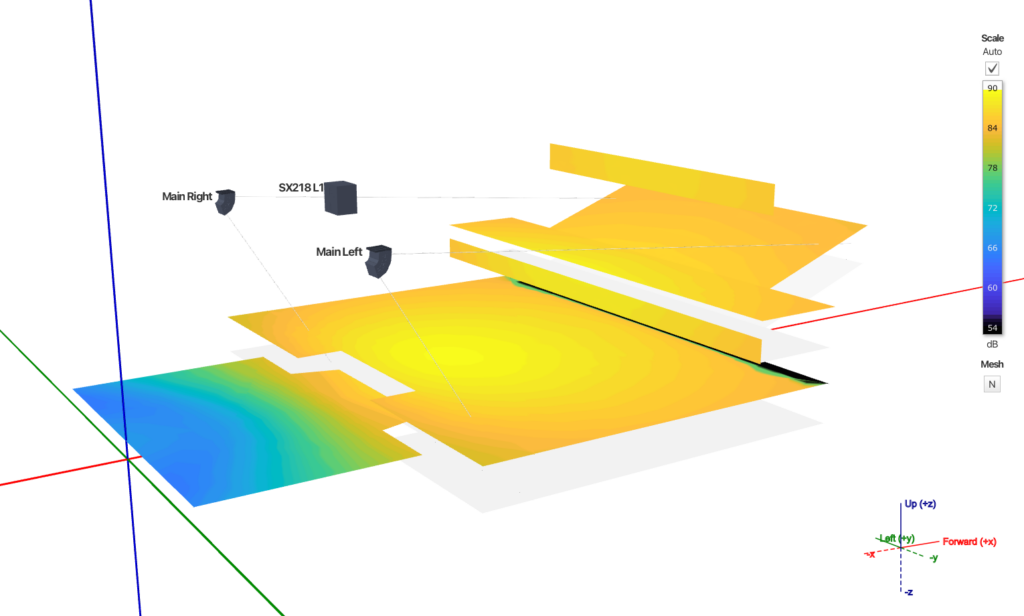
Modern worship audio design often relies on acoustic simulation software, sometimes called audio modeling software, to precisely plan sound systems before installation. These 3D computer models allow sound engineers to digitally recreate a sanctuary’s unique shape, materials, and speaker placements to predict how sound will behave in the actual space. For example, at Grace Baptist Church in Nashville, S&L Integrated sound engineers used audio modeling to visualize both low-frequency and high/mid-frequency coverage. One rendering showed subwoofers arranged in a cardioid pattern, directing bass energy toward the congregation while minimizing low-frequency impact on stage. Another map illustrated even mid and high-frequency coverage, ensuring consistent clarity throughout the sanctuary. Using these simulations helps save time and costs during setup and guarantees that every seat experiences clear, intelligible sound.

Real-World Church Audio Challenges
Sanctuaries—especially older buildings—often have documented problems with excessive reverberation. Integrators using line array church sound systems have been able to transform these spaces so that scripture readings, sermons, and choir performances can be fully heard.
The Integration Advantage for Worship Spaces
At S&L Integrated, our goal is not just installing equipment but delivering end-to-end sanctuary audio solutions. By working with industry leaders like Shure and Martin Audio, we specialize in creating environments where every word is clear and every song connects with the congregation.
Our team serves worship spaces across Atlanta, Athens, Columbus, Macon, and throughout Georgia, tailoring solutions to each room’s acoustics. Whether the challenge is reducing echo, updating church microphones, or implementing a modern line array system, the difference lies in expertise and integration—not just the gear itself.
Conclusion: Clarity Builds Connection in Worship
Achieving the sanctuary sound sweet spot requires a holistic approach:
- Reducing reverberation with smart design
- Choosing the best microphones for pastors, choirs, and soloists
- Deploying optimized, even-coverage speaker systems
When done right, the difference is profound. Sermons become engaging, choirs inspiring, and the spoken Word reaches every person in the sanctuary.
For churches and ministries in Georgia seeking to improve audio, S&L Integrated brings decades of expertise in worship sound systems. Because in the end, a clear message doesn’t just improve audio quality—it fosters lasting spiritual connection.
Frequently Asked Questions About Church Sound Systems
What is the best microphone for pastors in a church?
The best microphone for pastors depends on their preaching style. Headworn microphones provide consistent sound and hands-free operation, making them the most popular for modern pastors. Shure SM58 handhelds are excellent for guest speakers and singers, while lavalier lapels work in traditional settings where visibility is a concern.
How do you reduce echo in a church sanctuary?
Echo in churches is often caused by hard surfaces like stone, glass, and wood. The most effective solutions include acoustic panels, bass traps, and diffusion, as well as proper speaker placement to keep sound focused on the congregation instead of reflective walls and ceilings.
What is the difference between point-source and line array speakers in sanctuaries?
Point-source speakers are cost-effective for smaller churches but tend to lose volume and clarity farther from the stage. Line array speakers, like Martin Audio’s O-Line system, provide even sound coverage across the entire sanctuary, reducing reflections and improving vocal clarity in reverberant spaces.
Why is vocal intelligibility so important in worship audio?
The spoken word is the centerpiece of any house of worship. Without clear intelligibility, sermons and prayers can be lost in reverberation. High-quality microphones combined with properly designed speaker systems ensure that every person—whether in the front row or back pew—can hear the message clearly.
How much does it cost to upgrade a church sound system?
Costs vary widely depending on sanctuary size, existing issues, and whether line array systems or advanced acoustic treatments are required. Many churches start with upgrades to pastor microphones and acoustic treatment before moving to a full sanctuary audio redesign. A consultation with an integrator like S&L Integrated is the best way to determine project scope and budget.
Does S&L Integrated provide local service for church sound systems?
Yes. S&L Integrated serves houses of worship across Georgia, Florida and Tennessee, including Atlanta, Athens, Macon, Nashville, Tallahassee and surrounding areas. We specialize in designing, installing, and maintaining church sound systems that improve vocal clarity, reduce echo, and support choir and music performances.