“We signed three weeks ago. Where’s our equipment?”
This email landed in my inbox yesterday. And last week. And the week before that.
After 25 years integrating AV systems across the Southeast—from Fortune 500 boardrooms to small-town sanctuaries—I’ve realized that our industry’s biggest problem isn’t technical complexity or budget overruns. It’s the complete invisibility of where 80% of project value gets created.
Today, I’m pulling back the curtain on what we call “the submarine phase”—that crucial period where your system gets built twice, tested three ways, and optimized for scenarios you haven’t even imagined yet.
At S&L Integrated, we’ve structured this invisible work into our proven ECHO process:
- Engage with stakeholders to understand real needs
- Customize systems through careful engineering
- Harmonize all components for seamless operation
- Ongoing support that starts even before installation
This framework ensures every phase delivers maximum value.
The 80/20 Rule of AV Integration
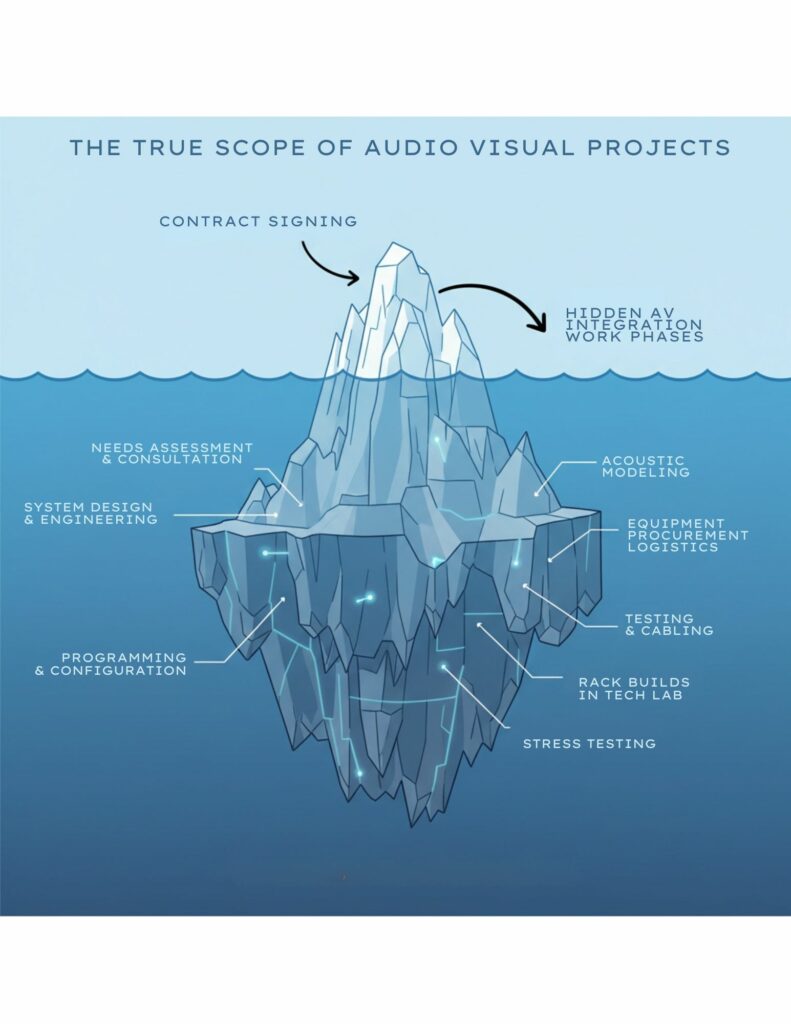
Here’s what most clients don’t realize: In professional AV integration, roughly 80% of the work happens before you see a single cable or screen. The remaining 20%—the visible installation—is actually the easiest part.
Think of it like an iceberg, but with a twist: that hidden 80% underwater isn’t dead weight. It’s your project’s foundation, insurance policy, and success guarantee all rolled into one.
Phase 1: The Organizational Detective Work (Weeks 1-3)
What you see: Occasional emails asking questions you thought were already answered.
What’s really happening: We’re conducting what I call “organizational archaeology.”
Our process involves:
- Shadow interviews with actual daily users (not just decision-makers)
- Network archaeology to understand your true bandwidth and infrastructure
- Space behavior analysis to see how rooms are actually used vs. intended
- Future-proofing research to anticipate your needs 3-5 years out
This detective work often reveals critical needs not apparent during early talks—wheelchair accessibility requirements, hearing loop compatibility, or workflow patterns that completely change our design approach.
Phase 2: The Three-Dimensional Chess Game (Weeks 3-8)
What you see: Radio silence while you wonder if we’ve forgotten about you.
What’s really happening: Our engineers are playing three-dimensional chess with acoustics, network topology, and supply chain logistics simultaneously.
Acoustic modeling: We’re not just placing speakers; we’re calculating reverberation times, identifying echo points, and modeling how your specific furniture and wall materials will affect sound. This often reveals that the “obvious” speaker placement would create dead zones exactly where your most important listeners sit.
Network architecture: Your AV system will generate more network traffic than you expect. We’re designing pathways that won’t choke your existing infrastructure or require expensive emergency upgrades.
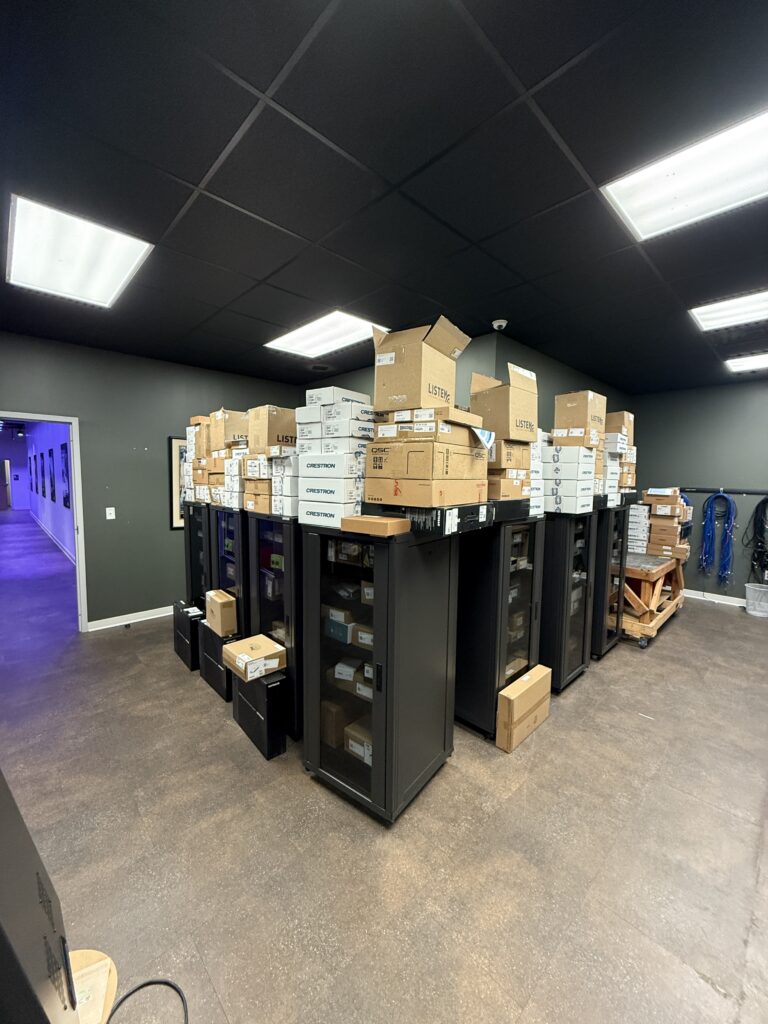
Supply chain orchestration: Here’s where it gets interesting. AV components aren’t sitting in warehouses waiting for your order. That display requires a 12-week manufacturing lead time. The specialized microphone array? It’s backordered until next quarter. We’re coordinating delivery of 40+ components from 12+ manufacturers across 3 continents to arrive in precisely the right sequence.
Phase 3: The Parallel Universe Build (Weeks 6-10)
What you see: Still nothing visible at your location.
What’s really happening: We’re building your system twice.
The first build happens in our lab, where every component gets connected, tested, and programmed. This isn’t just checking that things work—we’re optimizing for your specific use cases.
Programming phase: Your control system isn’t just turning things on and off. We’re creating intelligent automation that anticipates user needs. Walk into your conference room, and the system detects your presence, powers up displays, connects to your calendar system, and loads the right presentation template—all in under 15 seconds.
Stress testing: We simulate failure scenarios you hope never happen. What if someone accidentally unplugs the main switch? What if your internet goes down during a crucial video call? What if someone spills coffee on the control panel? Every failure mode gets a planned response.
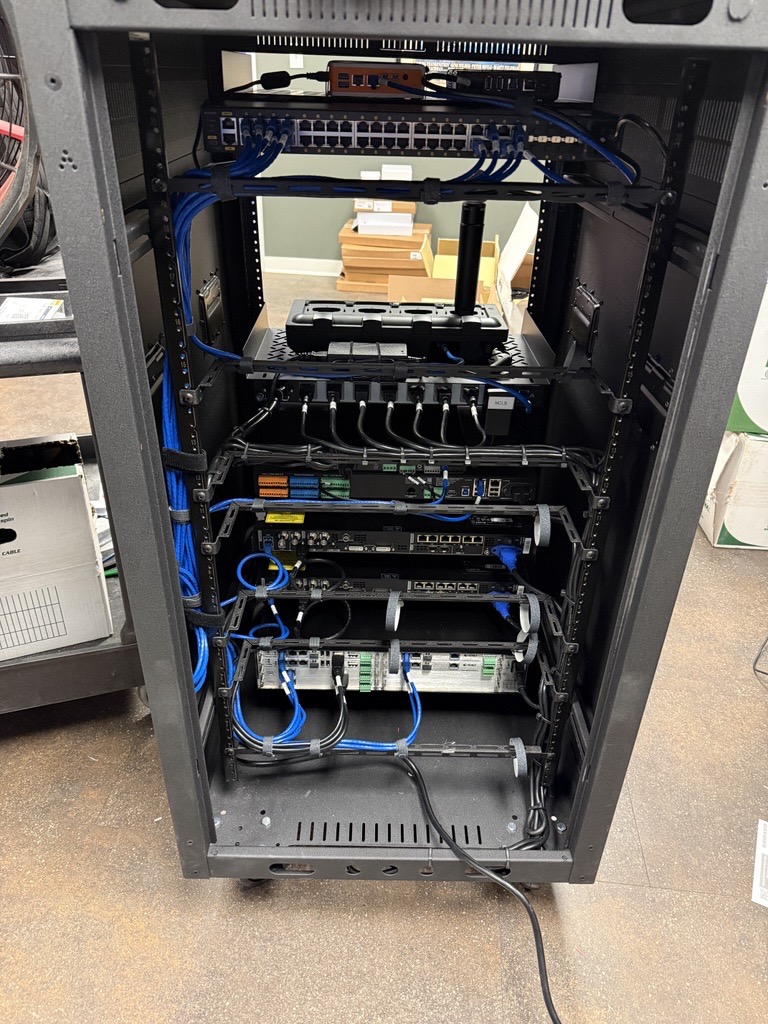

Phase 4: The Choreographed Installation (Weeks 10-12)
What you finally see: Technicians efficiently installing your system.
What’s really happening: This isn’t installation—it’s performance. Every cable pathway was planned, every component placement was optimized, and every potential obstacle was anticipated.
Because we’ve already built your system once, installation becomes a carefully choreographed reassembly. Our technicians know exactly which cable goes where, which settings enable which features, and how to optimize everything for your specific environment.
The difference this makes: Planned installations take 60% less time than “figure it out as we go” approaches. Less time means less disruption, lower costs, and faster time to value.

The ROI of the Invisible 80%
Here’s what this front-loaded approach delivers:
Immediate benefits:
- Systems work perfectly from day one (no “we’ll fix that next week” promises)
- Intuitive interfaces that users actually adopt
- Minimal disruption during installation
Long-term value:
- 70% fewer support calls in the first year
- Seamless integration with future upgrades
- Total ownership costs 40% lower than reactive approaches
Risk mitigation:
- No unpleasant surprises on installation day
- No emergency change orders
- No missed deadlines for critical events
Why the Wait Is Worth It
I get it—waiting is frustrating when you’re excited about your new capabilities. But consider this: Would you rather have a system that works flawlessly for 10 years, or one that’s installed quickly but requires constant fixes, updates, and eventual replacement?
The invisible 80% isn’t a delay—it’s an investment in certainty. When we finally flip the switch on your system, you’re not beta testing. You’re using a solution that’s been refined, optimized, and proven to work exactly as promised.
Your Next Steps
If you’re planning an AV integration project:
- Start early: Add 2-4 weeks to whatever timeline you think you need
- Trust the process: The quiet weeks aren’t empty weeks
- Stay engaged: We’ll keep you informed, but ask questions when they occur to you
Ready to see what the invisible 80% can do for your organization? Let’s talk about your project timeline and requirements. Because the best AV systems aren’t installed quickly—they’re installed right.
S&L Integrated has been transforming organizational communication across Georgia, Tennessee, and the Southeast since 1999. Contact our teams in Thomasville, Atlanta, or Brentwood, Tenn. to discuss your integration project.