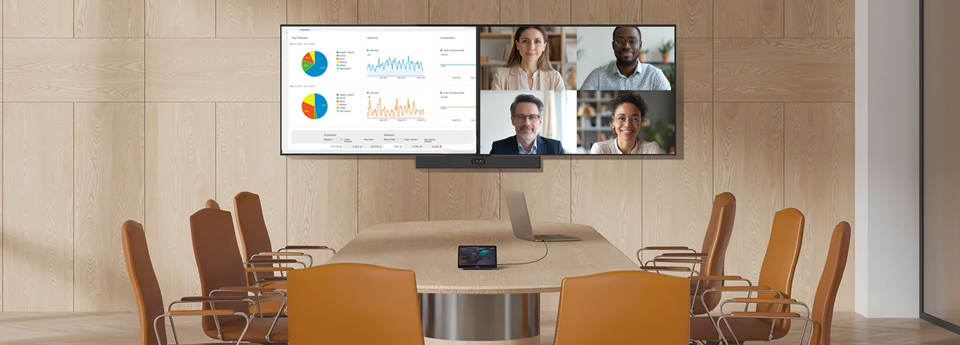
When your meeting rooms bridge the gap between remote and in-office teams, geography becomes irrelevant.
The Rural Talent Paradox
Companies in rural and suburban Georgia face a unique challenge in today’s competitive job market. While urban employers near Atlanta can tap into dense talent pools, rural businesses often struggle to compete for top candidates who expect flexibility and seamless remote work capabilities.
The paradox is real: your location may offer lower operating costs, better quality of life, and tight-knit company culture, but if candidates perceive that working remotely means being a second-class employee, you’ll lose them to competitors who’ve mastered hybrid work.
The reality? Hybrid and remote work arrangements are no longer negotiable perks—they’re baseline expectations. According to recent research, nearly half of workers who can work remotely would consider leaving their job if required to be in the office full-time.
Why Meeting Room Technology Matters More for Rural Companies
If you’re operating from a rural location, your meeting room technology is a statement about how seriously you take remote collaboration.
When candidates evaluate your company, they’re asking: “If I work remotely part of the time, will I be left out of important conversations? Will I struggle to hear what’s happening? Will I miss career opportunities because I’m not physically present?”
Your meeting rooms answer these questions before you do. A poorly equipped conference room with a single webcam and choppy audio sends a clear message: remote work is an afterthought here.
Properly designed collaboration spaces tell a different story. They show you’ve invested in making distance irrelevant and that remote participants are full members of the conversation, not digital spectators.
What Effective Meeting Room Technology Looks Like
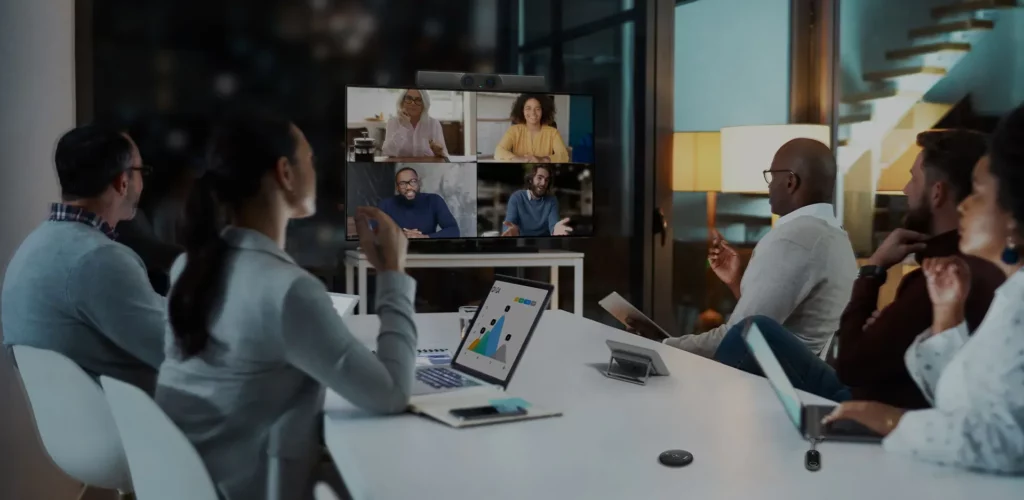
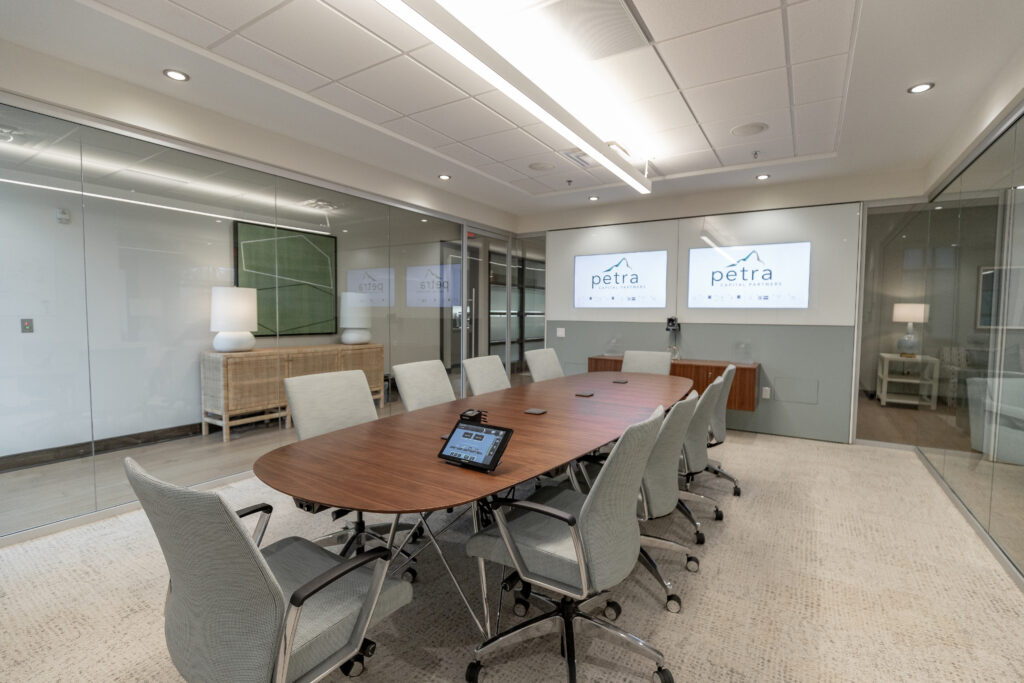
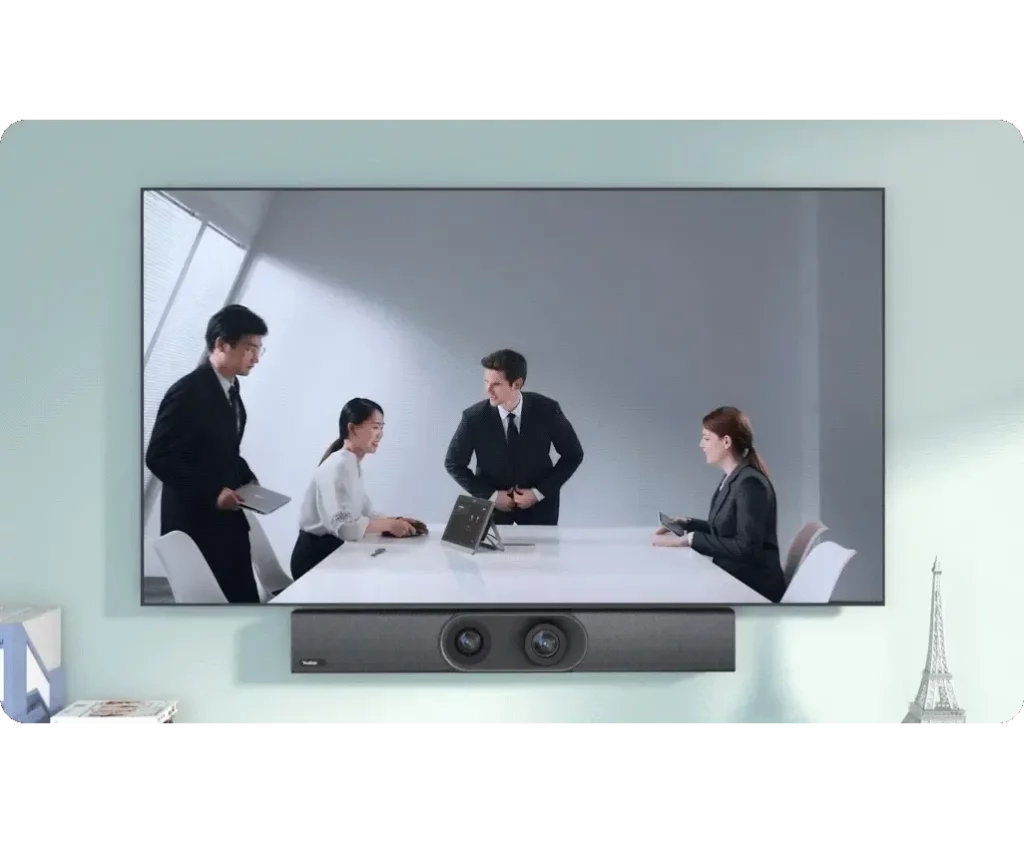
Creating meeting spaces that give remote workers equal footing isn’t about buying the most expensive equipment. It’s about thoughtful design that addresses real collaboration challenges.
Smart camera systems automatically track speakers and frame the conversation so remote participants can always see who’s talking. No more awkward moments where someone asks “who just said that?” because they’re staring at the back of someone’s head.
Professional audio solutions capture every voice in the room clearly, regardless of where people are sitting. When everyone can be heard, remote workers can actually contribute instead of constantly asking for clarification.
Consistent platforms like Microsoft Teams Rooms or Zoom Rooms create the same experience whether you’re joining from home or the office. When there’s no difference between the two, friction disappears.
Interactive displays and digital whiteboards bring remote participants into brainstorming sessions. When your remote designer can sketch ideas on a shared canvas in real-time while your in-office team does the same, collaboration feels natural.
The Rural Advantage: Making Geography Irrelevant
Here’s where rural employers can actually win: by investing in meeting room technology that eliminates distance as a barrier, you expand your talent pool beyond your immediate geography without sacrificing the benefits of having a physical hub.
You can recruit that senior developer who lives two hours away and only wants to come in once a week. You can hire the marketing manager who moved to your region for family reasons but has national experience. You can retain the talented employee who relocates but doesn’t want to leave your team.
This also solves the “critical mass” problem many rural offices face. When you only have six people in the office on a given day, meetings can feel sparse. But when those six can seamlessly collaborate with ten remote colleagues through properly equipped meeting rooms, you maintain the energy and innovation that drives success.
What Candidates Notice During Interviews
The interview process is your chance to showcase your commitment to hybrid work. When candidates visit your office, walk them through your meeting rooms. Show them the technology. Demonstrate how a remote worker joins a standup meeting or participates in a design review.
This transparency builds trust. It shows that when you say “we support remote work,” you’ve built infrastructure that makes it genuinely viable.
A Real-World Example
Drew Hall, Marketing Manager at S&L Integrated, lives four hours from the company’s home office in rural Thomasville, Ga.. When he toured the facility during his interview, one detail stood out: the multiple dedicated spaces equipped for video conferencing.
“I knew the team was committed to remote employees feeling like part of the company,” Drew recalls. “Seeing those purpose-built collaboration rooms was reassuring. It told me that working remotely wouldn’t mean being isolated.”
Seven months in, Drew’s experience has validated that impression. “There are still team members I haven’t met in person, but because we interact so often in video meetings, it feels like we are old friends. The technology makes the distance irrelevant.”
Drew’s story illustrates what happens when meeting room investment goes beyond checkbox compliance. Those video conferencing spaces made him confident enough to accept a position with a company four hours away. For S&L Integrated, that investment opened access to talent they couldn’t have recruited otherwise.
The ROI of Getting It Right
Investing in professional meeting room technology isn’t cheap, but neither is employee turnover. Consider the cost of losing a mid-career professional: recruiting expenses, lost productivity, onboarding time, and institutional knowledge walking out the door.
Compare that to the cost of properly equipping three or four collaboration spaces. For most companies, the investment pays for itself if it helps you retain even one or two key employees.
Beyond retention, there’s competitive advantage in recruiting. When you’re a rural employer competing against urban companies, having superior collaboration technology can be your differentiator. You’re not just offering remote work—you’re offering better remote work than companies twice your size.
Moving Forward
If you’re a rural employer serious about competing for top talent, start by auditing your meeting spaces. Ask yourself:
- Can remote participants hear everyone in the room clearly?
- Do remote workers have visual access to whiteboard content and shared materials?
- How easy is it for someone to join a meeting from home versus the conference room?
- When you watch meeting recordings, do remote participants seem like full participants or passive observers?
The answers reveal whether your technology supports your talent strategy or undermines it.
The future of work is hybrid. For rural employers, the companies that thrive will recognize that meeting room technology isn’t just an IT project—it’s a talent acquisition and retention strategy.
When you invest in collaboration spaces that make distance irrelevant, you’re buying access to talent you couldn’t otherwise reach, retention of employees you can’t afford to lose, and the ability to build a thriving company regardless of where your office is located.
That’s not just smart technology. That’s smart business.
Ready to transform your meeting spaces into talent magnets? Contact S&L Integrated to discuss how professional AV integration can expand your hiring possibilities and retain your best people.